Career Progression in Medical Coding: From CPC to Coding Auditor
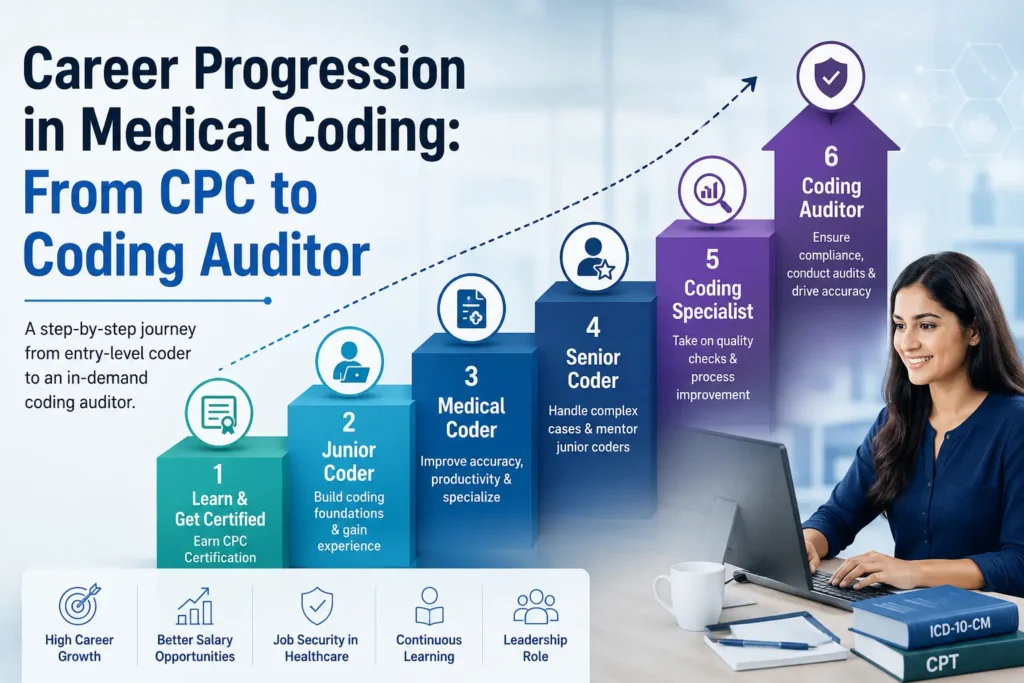
Career Progression in Medical Coding: From CPC to Coding Auditor Career Progression in Medical Coding: From CPC to Coding Auditor The healthcare industry is growing rapidly, and so is the demand for skilled medical coders. Today, medical coding is no longer just an entry-level profession—it offers excellent career growth, attractive salaries, and opportunities to specialize in different areas. Many students begin their journey with a Certified Professional Coder (CPC) certification and gradually move into advanced positions such as Senior Medical Coder, Coding Quality Analyst, Team Lead, Coding Educator, and Coding Auditor. If you’re planning a long-term career in healthcare without becoming a doctor or nurse, medical coding can be an excellent choice. At Coditech Healthcare Solutions, Pune, we help students build a strong foundation through practical training, industry-oriented curriculum, and certification guidance that supports long-term career success. What is Medical Coding? Medical coding is the process of converting medical diagnoses, procedures, treatments, and healthcare services into standardized codes using coding systems such as: ICD-10-CM CPT HCPCS Level II These codes help hospitals and insurance companies process medical claims accurately and ensure healthcare providers receive proper reimbursement. Step 1: Become a Certified Professional Coder (CPC) The first milestone in a medical coding career is earning the CPC (Certified Professional Coder) certification offered by AAPC. A CPC certification demonstrates that you understand: Medical terminology Human anatomy ICD-10-CM coding CPT coding HCPCS coding Insurance guidelines Medical documentation This certification is highly recognized by hospitals, healthcare organizations, and medical coding companies worldwide. Students looking for CPC Certification Training Institute in Pune often choose Coditech Healthcare Solutions because of its practical training approach, experienced trainers, and placement support. Step 2: Gain Practical Experience After obtaining CPC certification, most professionals start working as: Junior Medical Coder Outpatient Medical Coder Physician Coder Medical Billing Executive Healthcare Documentation Specialist During this stage, coders learn: Real-time medical records Coding accuracy Productivity targets Claim submission Insurance requirements Compliance standards This practical experience builds confidence and prepares coders for advanced roles. Step 3: Specialize in Medical Coding Once you gain 1–3 years of experience, specialization can significantly improve your career prospects. Popular specialty coding domains include: Evaluation & Management (E/M) Focuses on physician consultation coding and outpatient visits. Surgery Coding Involves coding complex surgical procedures across multiple specialties. Emergency Department (ED) Coding Requires quick understanding of emergency documentation and coding rules. IP-DRG Coding Specializes in inpatient hospital coding and Diagnosis Related Groups (DRGs). HCC Coding Risk adjustment coding for chronic conditions and Medicare Advantage plans. Home Health Coding (BCHH-C) Focuses on coding for home healthcare services and patient care documentation. At Coditech Healthcare Solutions, students can pursue advanced specialty training in E/M, ED, Surgery, IP-DRG, HCC, and BCHH-C to expand their career opportunities. Step 4: Earn Advanced Certifications After gaining experience, professionals often pursue advanced certifications to increase their earning potential. Popular certifications include: CCS (Certified Coding Specialist) CIC (Certified Inpatient Coder) COC (Certified Outpatient Coder) CRC (Certified Risk Adjustment Coder) BCHH-C Certification CPMA (Certified Professional Medical Auditor) These certifications demonstrate advanced coding knowledge and make candidates more competitive in the healthcare job market. Step 5: Become a Senior Medical Coder With strong coding skills and several years of experience, professionals can advance to the role of Senior Medical Coder. Responsibilities include: Reviewing complex medical records Assisting junior coders Resolving coding queries Improving coding quality Ensuring compliance with coding guidelines Coordinating with physicians and healthcare providers Senior coders are valued for both their technical expertise and leadership abilities. Step 6: Move into Coding Quality and Compliance Many experienced coders transition into quality-focused roles such as: Coding Quality Analyst Coding Compliance Specialist Documentation Improvement Specialist (CDI) Coding Trainer These professionals ensure that coding is accurate, compliant with industry standards, and aligned with payer requirements. This stage also offers opportunities to mentor new coders and contribute to organizational quality improvement. Step 7: Become a Coding Auditor One of the most respected positions in the medical coding profession is Coding Auditor. A coding auditor reviews medical records to verify: Coding accuracy Compliance with coding guidelines Documentation completeness Revenue integrity Audit readiness Risk identification Coding auditors play a critical role in helping healthcare organizations reduce claim denials, prevent compliance issues, and improve reimbursement accuracy. Professionals in this role often work with hospitals, insurance companies, healthcare consulting firms, and revenue cycle management organizations. Skills Needed for Career Growth Career progression in medical coding depends on continuous learning and skill development. Key skills include: Strong knowledge of ICD-10-CM, CPT, and HCPCS Medical terminology Human anatomy and physiology Analytical thinking Attention to detail Time management Communication skills Problem-solving Knowledge of payer guidelines Compliance awareness Professionals who regularly update their coding knowledge are more likely to secure promotions and advanced roles. Typical Medical Coding Career Path Experience Position Fresher CPC Certified Medical Coder 1–2 Years Medical Coder 2–4 Years Senior Medical Coder 4–6 Years Specialty Coder / Team Lead 5–8 Years Coding Quality Analyst 6–10 Years Coding Auditor 8+ Years Coding Manager / Coding Consultant / Trainer Why Choose Coditech Healthcare Solutions? If you’re looking for a Medical Coding Training Institute in Pune, choosing the right institute is the first step toward a successful career. At Coditech Healthcare Solutions, we focus on building practical skills that prepare students for real-world healthcare environments. We Offer: CPC Certification Training CCS Certification Training CIC Certification Training COC Certification Training CRC Certification Training BCHH-C Certification Training Australian Medical Coding Training E/M Specialty Training Surgery Coding Training ED Coding Training IP-DRG Training HCC Coding Training Live Practical Coding Sessions Interview Preparation Resume Building Support Certification Guidance 100% Placement Assistance Our experienced trainers provide industry-focused learning that helps students confidently begin their careers and prepare for future advancement. Final Thoughts A career in medical coding offers much more than an entry-level job. With the right certifications, practical experience, and continuous learning, professionals can progress from a Certified Professional Coder (CPC) to respected roles such as Senior Medical Coder, Coding Quality Analyst, and ultimately Coding Auditor. If you’re ready to build a rewarding career in