medical coding jobs for freshers

How to Build a Medical Coding Career in 2026
Blog

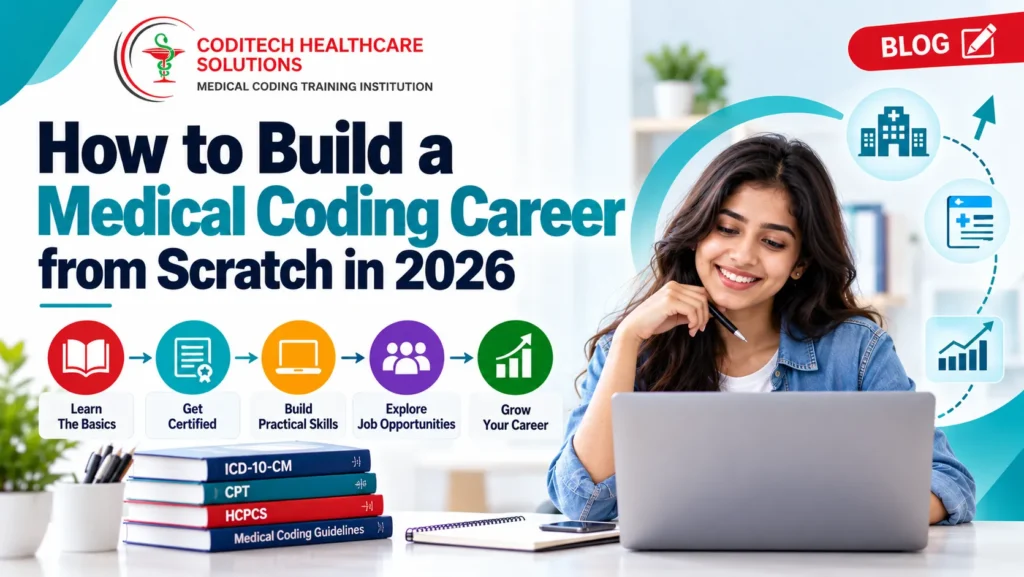
How to Build a Medical Coding Career from Scratch in 2026

How to Build a Medical Coding Career from Scratch in 2026 Have you completed your graduation and started wondering what to do next? Or are you looking for a career in healthcare but don’t want to work directly with patients? Medical coding might be worth exploring. Many graduates spend months searching for career options, comparing courses and trying to understand which skills employers actually need. Some discover medical coding through a friend, while others come across it while looking for healthcare jobs online. The field can seem confusing at first because of unfamiliar medical terms, coding systems and certification requirements. But you don’t need to know everything before you begin. Like any other profession, medical coding becomes easier to understand when you break the learning process into smaller steps. You start with medical terminology, learn how healthcare documentation works, understand coding guidelines and gradually develop the skills required for professional work. If you’re planning to enter this field in 2026, this guide will help you understand where to start, what to learn, how certification fits into your journey and how to prepare for your first job. What Is Medical Coding, and Why Does Healthcare Need It? Think about what happens when a patient visits a hospital. A doctor examines the patient, records symptoms, identifies a diagnosis, recommends treatment and may perform a procedure. All this information becomes part of the patient’s medical record. Healthcare organizations need a standardized way to represent many of these diagnoses, procedures and services. This is where medical coding comes in. Medical coders review clinical documentation and assign appropriate codes according to established coding systems and guidelines. Some of the important code sets include: ICD-10-CM: Used primarily for diagnosis coding. CPT: Used to report many medical procedures and professional services. HCPCS: Used for various healthcare services, supplies and products. These codes support processes such as claims submission, reimbursement, healthcare reporting and record management. Medical coding requires more than memorizing numbers. A coder must understand the documentation, follow the applicable guidelines and select codes that accurately represent the information available. That is why proper training and regular practice are important. Step 1: Check Whether Medical Coding Matches Your Interests Before paying for a course, take a little time to understand the nature of the work. Medical coding involves reading documents, studying medical terminology, checking guidelines and paying attention to details. Much of the work is computer-based, and accuracy is important. You may find the field interesting if you enjoy: Working with information and documentation Learning how the human body works Solving structured problems Using computers Following rules and guidelines Performing tasks that require concentration You should also be comfortable learning unfamiliar terminology. At the beginning, words related to anatomy, diseases and medical procedures may seem difficult. That is normal. You don’t have to be an expert before joining a course. What matters is your willingness to learn and practise consistently. Step 2: Understand the Educational Requirements One question beginners often ask is whether they need a medical degree to become a medical coder. The answer depends on the employer, job role and certification requirements. Many medical coding opportunities are aimed at graduates from life science, healthcare and related educational backgrounds. Some employers may accept candidates from other backgrounds if they meet the relevant requirements. Before enrolling, check the eligibility criteria for the certification and jobs you want to pursue. If you’re a fresher, focus on understanding the fundamentals instead of worrying about what you don’t know yet. A suitable training program can introduce you to the medical concepts and coding systems you need to study. Step 3: Start with Medical Terminology Medical terminology is one of the first subjects you should learn. Medical records contain words describing diseases, symptoms, body parts, procedures and treatments. If you cannot understand the terminology, interpreting the record becomes difficult. For example, learning common terms related to the cardiovascular system can help you understand documentation about the heart and blood vessels. Similarly, understanding the musculoskeletal system can help when studying records related to bones, joints and muscles. Start with the basics: Common medical prefixes and suffixes Names of body parts and organs Common diseases and conditions Medical abbreviations Terms related to diagnostic tests Surgical and procedural terminology Try to understand the meaning of each term rather than memorizing a long list in one sitting. Even 20–30 minutes of regular revision can help you build familiarity over time. Step 4: Learn Anatomy and Physiology Once you have started learning medical terminology, spend time understanding anatomy and physiology. Anatomy deals with the structure of the human body, while physiology explains how its different parts function. You don’t need to study every subject at the same depth as a doctor. However, you should understand the major body systems and common medical conditions. Begin with systems such as: Cardiovascular Respiratory Digestive Nervous Musculoskeletal Urinary Endocrine Connect what you learn to medical documentation and coding examples. This makes the subject more practical and easier to remember. When you understand the condition described in a medical record, the coding concepts become more meaningful. Step 5: Learn the Main Medical Coding Systems After developing a basic medical foundation, move on to coding systems. ICD-10-CM Start by learning how diagnosis codes are organized and how to use the Alphabetic Index and Tabular List. You will also need to understand the relevant conventions and official guidelines. CPT Learn how CPT is structured and how it is used to report many medical procedures and professional services. As you progress, study the relevant sections and coding rules. HCPCS Understand how HCPCS is used for certain healthcare services, supplies and products. Don’t rush through these subjects simply to finish the syllabus. Take time to understand how codes are located, verified and applied. A good learning process involves reading the documentation, identifying the relevant information, consulting the coding resources and checking whether the selected code is supported. Step 6: Practise with Medical Records This is the stage where your learning starts to become practical.
Can Freshers Get Medical Coding Jobs Without Experience?
Blog

Can Freshers Get Medical Coding Jobs Without Experience?

Can Freshers Get Medical Coding Jobs Without Experience? Can Freshers Get Medical Coding Jobs Without Experience? (Complete Beginner Guide) Many graduates who want to enter the healthcare industry often ask one common question: “Can freshers get medical coding jobs without experience?” The answer is YES. Medical coding is one of the few healthcare careers where freshers can start their professional journey without prior work experience. With the right training, certification, and coding knowledge, beginners can easily enter this growing industry. If you are planning to start a career in medical coding, this guide will explain everything you need to know — including job opportunities, required skills, certifications, and how the right training can help you secure your first job. At Coditech Healthcare Solutions, we help students build successful careers through professional medical coding training in Pune and industry-focused certification programs. What is Medical Coding? Medical coding is the process of converting medical diagnoses, procedures, and healthcare services into standardized codes used by hospitals and insurance companies. The most commonly used coding systems include: ICD-10-CM – Diagnosis codingCPT (Current Procedural Terminology) – Procedure codingHCPCS – Medical supplies and services coding These codes are essential for: • Insurance claim processing• Hospital billing systems• Medical documentation• Healthcare compliance Medical coders play a crucial role in the healthcare revenue cycle by ensuring accurate medical records and correct billing processes. Can Freshers Get Medical Coding Jobs Without Experience? Yes, freshers can definitely get medical coding jobs even without experience. Unlike many other industries, medical coding focuses more on skills and certification rather than prior work experience. Most companies hire fresh graduates for entry-level roles such as: • Junior Medical Coder• Trainee Medical Coder• Medical Coding Associate• Entry-Level Coding Analyst If you have strong coding knowledge and certification training, companies are willing to train you further once you join. Students who complete a medical coding course in Pune from a reputed institute often get better opportunities in healthcare companies and coding firms. Why Healthcare Companies Hire Freshers The medical coding industry has a constant demand for trained professionals. Many companies actively hire freshers for several reasons. 1. Training-Based Hiring Medical coding companies usually provide internal training programs for new employees. Freshers are easier to train according to company guidelines and workflow. 2. Growing Healthcare Industry The demand for medical coders is increasing because of: • Growth of hospitals and healthcare services• Expansion of medical insurance claims• Outsourcing of US healthcare documentation This creates more job opportunities for beginners. 3. Certification Matters More Than Experience In medical coding, professional certification often holds more value than previous work experience. Certified candidates are usually preferred by recruiters. Who Can Start a Career in Medical Coding? Medical coding is suitable for students from healthcare and life science backgrounds, including: • BSc Nursing• BPharm / DPharm• BDS Graduates• MBBS / BHMS / BAMS• Life Science Graduates However, even non-medical graduates can enter this field by completing proper professional training. Students who enroll in a medical coding training program in Pune can gain the knowledge and skills required to begin their career in this industry. Skills Required for Freshers in Medical Coding To get hired as a beginner, you need to develop some essential skills. Strong Medical Terminology Knowledge Understanding medical terms related to anatomy, physiology, diseases, and procedures is very important for accurate coding. Knowledge of Coding Guidelines A professional coder should understand coding systems such as: • ICD-10-CM coding rules• CPT coding guidelines• Modifiers• Bundling and unbundling concepts Accuracy and Attention to Detail Even a small coding mistake can lead to claim rejection, so accuracy is very important. Communication Skills Clear communication is important during interviews, documentation, and reporting. Professional Certification Certification increases your credibility and improves your chances of getting hired. At Coditech Healthcare Solutions, our medical coding course in Pune focuses on building all these skills through practical training and case studies. Best Certification for Freshers in Medical Coding One of the most recognized certifications in the medical coding industry is the CPC (Certified Professional Coder) certification. CPC Certification (AAPC) The CPC certification is widely accepted across the healthcare industry and is considered the best entry-level certification for outpatient coding jobs. Other certifications include: • CCS (Certified Coding Specialist)• CCA (Certified Coding Associate) However, for beginners, CPC certification training in Pune is highly recommended because it improves employability and career growth. Step-by-Step Guide for Freshers to Get Medical Coding Jobs If you are a fresher planning to enter this field, follow this simple roadmap. Step 1: Join a Professional Medical Coding Course Choose a reputed institute that offers: • Experienced trainers• Updated syllabus• Practical case studies• Certification exam preparation Step 2: Learn ICD-10-CM, CPT and HCPCS Coding These coding systems are widely used in the US healthcare industry. Step 3: Practice Through Mock Tests Mock exams help improve: • Coding speed• Accuracy• Exam confidence Step 4: Create a Strong Resume Your resume should highlight: • Medical coding training• Certification status• Coding knowledge• Practical training experience Step 5: Prepare for Interviews Recruiters often ask questions related to: • Coding guidelines• Anatomy and medical terminology• CPT modifiers• ICD-10 rules Step 6: Apply for Entry-Level Jobs Apply to hospitals, healthcare BPOs, and medical coding companies. Students who complete medical coding training in Pune at Coditech Healthcare Solutions receive proper guidance for job interviews and career preparation. Do Freshers Need Internships in Medical Coding? Internships are not compulsory, but they can provide additional advantages. Internship programs help students: • Gain practical coding experience• Work on live case studies• Improve coding accuracy• Build confidence for interviews Many professional institutes offer internship support as part of their training program. Common Mistakes Freshers Should Avoid Some beginners make mistakes that can slow down their career growth. Choosing Low-Quality Training Institutes Poor training leads to weak coding knowledge and fewer job opportunities. Ignoring Coding Guidelines Understanding coding rules is essential for accurate coding. Not Preparing for Certification Certification improves credibility and increases hiring chances. Lack of Interview Preparation Even skilled candidates may fail interviews without

🎯 Admissions Open for 2026 Batch   |   💼 100% Placement Assistance   |   📞 Call Now: +91-8956660060—  For  Medical Coding Training  

Contact Us

Scroll to Top