
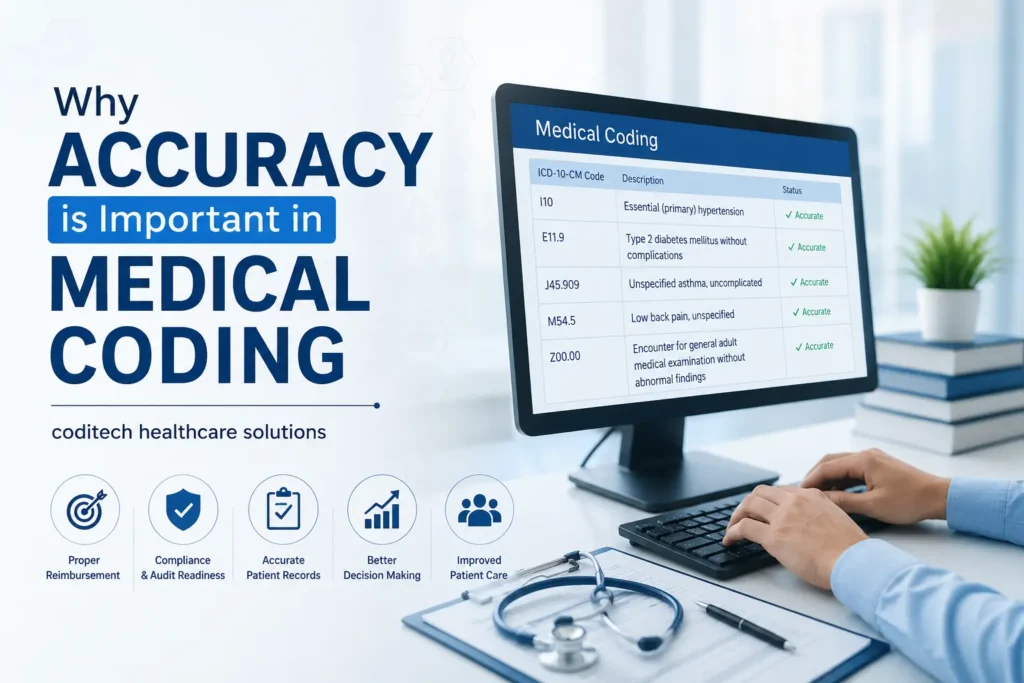
Why Accuracy Matters in Medical Coding
Why Accuracy Matters in Medical Coding Why Accuracy Matters in Medical Coding Medical coding plays an Important role in the healthcare industry. Every diagnosis, treatment, and medical procedure must be translated into standardized codes that healthcare providers, insurance companies, and regulatory authorities can understand. Because these codes directly impact billing, reimbursement, compliance, and patient records, accuracy is essential. A single coding error may seem minor, but it can lead to claim denials, payment delays, compliance issues, and inaccurate patient documentation. This is why healthcare organizations place a high value on skilled medical coders who can maintain precision and consistency in their work. At Coditech Healthcare Solutions, students are trained to understand coding guidelines, medical terminology, and documentation practices that help build strong coding accuracy from the beginning of their careers. Understanding Accuracy in Medical Coding Medical coding accuracy refers to assigning the correct codes to diagnoses, procedures, treatments, and healthcare services based on patient documentation. Medical coders work with coding systems such as: ICD (International Classification of Diseases) CPT (Current Procedural Terminology) HCPCS (Healthcare Common Procedure Coding System) To select the correct code, coders must carefully review medical records, physician notes, laboratory reports, and treatment documentation. Accurate interpretation ensures that the healthcare service provided is properly represented. Accurate Coding Supports Proper Billing Healthcare providers rely on medical codes to generate bills and submit claims to insurance companies. When coding is accurate, organizations can process claims smoothly and receive appropriate reimbursement for the services they provide. Benefits of accurate coding include: Faster claim processing Reduced billing errors Improved revenue cycle management Better financial performance for healthcare facilities Fewer claim rejections and payment delays Incorrect coding can result in underpayments, overpayments, or claim denials, creating additional administrative work for healthcare providers. Reducing Insurance Claim Denials Insurance companies review submitted claims before approving payments. If a claim contains incorrect, incomplete, or inconsistent coding, it may be denied or delayed. Accurate medical coding helps: Increase claim acceptance rates Minimize claim rework Reduce administrative burden Improve reimbursement timelines Strengthen communication between providers and insurers Healthcare organizations prefer coders who can consistently submit error-free claims and maintain high-quality documentation standards. Maintaining Regulatory Compliance The healthcare industry operates under strict coding regulations and compliance standards. Medical coders must follow official coding guidelines and payer-specific requirements to ensure compliance. Accurate coding helps organizations: Meet regulatory requirements Reduce audit risks Prevent compliance violations Support ethical healthcare practices Avoid financial penalties Maintaining coding accuracy is one of the key ways healthcare providers protect themselves from legal and regulatory challenges. Enhancing Patient Record Quality Medical coding is not only about billing. It also contributes to maintaining accurate patient records and healthcare data. Proper coding supports: Clear patient history documentation Continuity of care Clinical research and analysis Healthcare reporting Public health monitoring When coding errors occur, patient records may become incomplete or misleading, potentially affecting future treatment decisions. The Impact of Small Coding Errors Even minor coding mistakes can create significant challenges. Common consequences include: Delayed insurance payments Rejected claims Compliance concerns Incorrect patient records Increased administrative workload Financial losses for healthcare providers Because of these risks, attention to detail is considered one of the most important qualities of a successful medical coder. Essential Skills for Coding Accuracy Medical coders can improve their accuracy by developing the following skills: Attention to Detail Carefully reviewing documentation helps identify critical information and prevents coding mistakes. Knowledge of Medical Terminology Understanding medical terms, conditions, procedures, and abbreviations is essential for selecting the correct codes. Anatomy and Physiology Understanding A strong foundation in human anatomy helps coders interpret medical records accurately. Analytical Thinking Coders must analyze documentation thoroughly and apply coding guidelines correctly. Familiarity with Coding Guidelines Staying updated with coding changes and industry standards ensures consistent coding quality. Documentation Review Skills The ability to review and interpret clinical documentation is vital for coding accuracy. Growing Demand for Accurate Medical Coders As healthcare systems continue to expand and digitize, the need for skilled medical coders is increasing worldwide. Healthcare organizations seek accurate coders because they help: Improve operational efficiency Reduce claim denials Support compliance efforts Enhance patient data quality Strengthen revenue management This growing demand creates excellent career opportunities for individuals interested in the healthcare sector. Build Your Medical Coding Career with Coditech Healthcare Solutions Coditech Healthcare Solutions is committed to helping aspiring medical coders develop the knowledge and practical skills needed for success in the healthcare industry. Through structured training programs, industry-focused learning, certification guidance, and practical exposure, students gain confidence in medical coding concepts and real-world applications. Whether you are a graduate, a career changer, or someone looking to enter the healthcare industry, medical coding can offer a stable and rewarding career path. Frequently Asked Questions (FAQs) 1. Why is accuracy important in medical coding? Accuracy is important because coding errors can affect billing, insurance claims, compliance requirements, and patient records. Correct coding ensures smooth healthcare operations and proper reimbursement. 2. What happens if a medical coder makes a mistake? Coding errors can result in claim denials, delayed payments, compliance issues, inaccurate patient records, and financial losses for healthcare providers. 3. How can medical coders improve their accuracy? Medical coders can improve accuracy through continuous learning, regular practice, strong documentation review skills, and staying updated with coding guidelines. 4. Is attention to detail necessary in medical coding? Yes. Attention to detail is one of the most important skills for medical coders because even small mistakes can have significant consequences. 5. Can beginners become successful medical coders? Absolutely. With proper training, dedication, and practical experience, beginners can develop strong coding skills and build successful careers in medical coding. 6. What skills are required to become a medical coder? Key skills include medical terminology knowledge, anatomy understanding, analytical thinking, attention to detail, documentation review, and coding guideline knowledge. 7. Is medical coding a good career option? Yes. Medical coding offers strong career prospects, growing demand, opportunities for professional certification, and long-term growth within the healthcare industry. 8. Does Coditech Healthcare Solutions provide medical coding training?